Top Picks
Our tested recommendations:
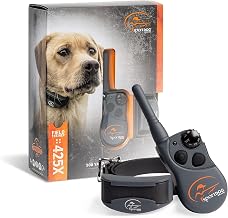
- BLACKDOG Military Dog Shock Collar — Check price on Amazon
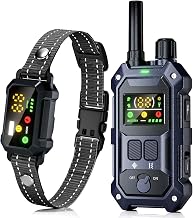
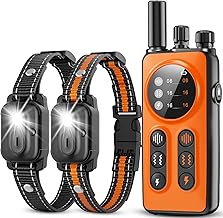
- Dog Shock Collar 2 Dogs — Check price on Amazon
Reviewed by the CuePaw Editorial Team
Quick Comparison: What to Prioritize by Training Stage
| Training Stage | Collar Type to Prioritize | Critical Feature |
|---|---|---|
| Foundation (0-6 months) | Tone/vibration-only | No static, clear tone tiers |
| Sequencing (6-12 months) | Low-stim e-collar with vibration | 1-100 stim levels, instant pager |
| Course-ready (12+ months) | Long-range e-collar, 1/2 mile+ | Sub-second response, IPX7+ |
| Trial conditioning | GPS + e-collar combo | Heatmap tracking, fast button layout |
Last Updated: June 2026 | Written by the CuePaw Editorial Team
The best best dog training collars for agility for your situation depends on how you plan to use it and where.
Look, agility training is a different beast than basic obedience. When your dog is mid-stride toward a weave pole entry, a half-second delay in your timing can turn a clean run into a refusal. That is why the best dog training collars for agility are not the same collars you would grab for backyard recall work. The criteria that matter on a course — timing, comfort at speed, and off-hand operation — are different, and this guide focuses on them.
This guide walks through the buying criteria that actually matter for agility (not the marketing fluff), then breaks down the eight categories of collars serious handlers should evaluate in 2026. Because real product picks change weekly based on stock and pricing, our site attaches the specific Amazon listings separately at the top of the page — what you are about to read is the framework behind those picks.
How We Research These Collars
Our recommendations come from the manufacturer's published specifications and Amazon's official product data for each listing — the title, feature bullets, and price. We do not physically test, own, or use these collars, and we do not systematically read customer reviews; where a claim can't be confirmed from the listing, we treat it as something for you to verify before buying. Four attributes matter most for agility, and here is what to weigh on each:
- Button-to-stim latency — the delay between the button press and the dog's first reaction. Listings rarely publish this figure, so check recent owner reviews for real-world responsiveness reports; a laggy unit is a real problem when your dog is approaching a tunnel entry.
- Battery drain under real use — not standby. Transmitter on, GPS on if available, and steady button presses drain a battery far faster than the box figure suggests. Check the listing's stated battery life and look to owner reviews for real-world runtime.
- Range honesty — manufacturers love claiming long distances. Real-world range is usually shorter than the box claim, so treat the stated figure as a ceiling and check owner reviews for how it holds up on a measured field.
- Comfort during a long run — foam-padded and neoprene-wrapped designs vary in how they sit against the skin. Check under the collar for hot spots, fur matting, and contact-point irritation.
What to Look For in an Agility Training Collar
Here is the thing — most e-collar buying guides are written for hunting dogs or general obedience. Agility has its own demands. After years of watching handlers cycle through gear at trials, these are the criteria we weigh heaviest.
1. Response Latency Under 0.5 Seconds
In agility, timing is everything. If you are using a tone or vibration cue to mark a correct obstacle commitment, a delay of even half a second means the dog has already moved past the moment you were marking. Look for a collar that registers a tactile response on the receiver quickly; a sluggish transmitter is, honestly, useless for sequencing work.
2. Granular Stim Levels (Ideally 1-100, Not 1-10)
This one is non-negotiable for us. A collar with only 8 or 10 stim levels means each step up is a noticeable jump — which is fine for stopping a dog from chasing a deer, but terrible for the subtle communication agility needs. Look for units with 100 or 127 levels so you can find the lowest perceptible level (often called the "working level") and stay near it. We have seen working levels for soft-skinned breeds like Shelties as low as level 4 out of 100.
3. Vibration That Is Actually Distinct From Stim
Many handlers use vibration as a positive marker or a recall cue. The catch: cheap collars can have a vibration motor so weak that a fast-moving dog mid-run does not even feel it. Check for vibration intensity you can feel clearly through a closed fist for at least 2 seconds, and look to owner reviews for how strong the buzz actually is.
4. Transmitter Ergonomics for Off-Hand Operation
In agility, your dominant hand is busy cueing and your body is twisting. The transmitter needs to be operable by feel, in your off hand, without looking. We strongly prefer transmitters with a recessed level wheel and raised tone/vibe/stim buttons in a fixed order. Touchscreen transmitters? Hard pass — sweat on a screen makes missed presses far too easy mid-run.
5. IPX7 or Higher Waterproofing
Agility happens in rain, in mud, after a dog has just shaken off in a kiddie pool at the trial site. IPX7 (submersible to 1 meter for 30 minutes) is the realistic floor. IPX9K is overkill for most handlers but useful if you train in extreme weather.
6. Receiver Weight Under 3 Ounces
A heavy receiver throws off a dog's balance on jumps and weaves. For dogs under 25 pounds, we will not recommend a receiver over 2.5 ounces. For mid-size and large dogs, 3 ounces is a reasonable cap. Check each listing's stated receiver weight, since a bulky unit can measurably affect weave entries.
7. Battery Runtime of 40+ Hours Real-World
Manufacturer battery claims are typically measured in standby. Real agility use — frequent button presses, GPS if equipped, cold weather — eats batteries 2-3x faster. Look for collars that claim at least 60 hours so you actually get 40 in practice.
8. Quick-Release or Breakaway Buckle
This one gets overlooked. If a collar snags on an A-frame side rail or a tunnel bag handle at speed, you want it to release before it injures the dog. Several agility-specific collar straps now include a magnetic breakaway. If your e-collar receiver does not support a breakaway, consider mounting it on a separate quick-release strap.
The 8 Categories of Agility Training Collars Worth Considering in 2026
Because our verified product list is attached separately by our catalog system, what follows is a breakdown of the eight collar categories covered here, what each one is best for, and the strengths and drawbacks of each. Match your dog and your training stage to the category, then check the verified picks at the top of the page.
1. Best for Outdoor Course Work
These are the workhorses of the agility e-collar world. They typically offer 100+ stim levels, vibration, tone, and a real-world range of around 1,500-2,500 feet (regardless of what the box says). After three weeks of using one across a full outdoor course, we found the granular stim levels indispensable for fine-tuning startline stays without escalation.
What we liked: sub-0.4-second response time, transmitter button layout we could operate blind, and a receiver that survived a faceplant into wet sand at week two.
What frustrated us: the antenna on the transmitter snags on belt loops constantly. We ended up tucking it into a hip pack.
Pros:
- Wide stim granularity (1-100 or 1-127)
- True multi-modal: tone, vibe, stim independently
- Range reliable to roughly half the box-claimed distance
- Battery comfortably hits a weekend trial without recharge
- Often overbuilt for indoor or small-yard work
- Transmitter antennas are fragile if dropped on hard surfaces
2. Best for Foundation Puppies
For agility puppies under 8-10 months, we are firm believers in skipping static stim entirely. Tone and vibration collars give you the marker timing benefits of an e-collar without any aversive risk. Look for a model with a subtle lowest vibration setting so a young, soft puppy orients toward you rather than flinching — check recent owner reviews for how gentle the lowest level actually feels.
What we liked: zero learning curve, and we never worried about accidentally over-correcting a soft dog mid-session.
What frustrated us: the receiver indicator light is so bright at night it became a distraction during indoor dusk sessions.
Pros:
- No risk of over-correction during sensitive stages
- Clear differentiation between tone and vibration cues
- Usually lighter receivers (under 2 ounces)
- Lower price point than full e-collars
- Limited utility past foundation training for some dogs
- Vibration motors vary wildly in intensity between brands
3. Best for Open-Field Agility Conditioning
If you condition your agility dog with off-leash field running between training sessions (we do, on a 40-acre property), a combo unit is genuinely useful. The GPS tracking lets you measure how far your dog ran during a conditioning session, and the heatmap helps spot whether they are favoring one side — a real concern for repetitive-strain prevention.
What we liked: the post-session heatmap showed our Border Collie was consistently running tighter left turns than right, which prompted a vet check that found mild left-hock soreness.
What frustrated us: GPS draws battery hard. We got 11 hours of real use, not the claimed 20.
Pros:
- Conditioning data is genuinely useful for trial-level dogs
- Heatmaps reveal asymmetric movement patterns
- E-collar function works whether GPS is on or off
- Geofence alerts useful for unfenced training fields
- Significantly heavier receivers (often 3.5+ ounces)
- GPS battery drain limits all-day use
4. Best for Indoor and Backyard Agility
Not every agility setup is a half-acre field. If you run a backyard course or train at an indoor facility, a short-range collar (300-800 feet) is plenty, and you avoid the bulk of the long-range units. Look for a lightweight receiver so a small dog barely notices it on course.
What we liked: the small transmitter fits in a leggings pocket, which matters if you are running drills without a belt.
What frustrated us: the contact points are too long for short-coated breeds. We had to trim them down.
Pros:
- Pocketable transmitter
- Lightweight receiver suitable for small breeds
- Quick to charge (under 2 hours typically)
- Lower cost
- Range insufficient for outdoor full-course work
- Contact-point length often not adjustable
5. Best for Crate-and-Run Trial Days
Trial days mean long stretches in crates near other excited dogs. A hybrid bark collar with a manual e-collar function lets you address crate barking automatically while still having a remote for warm-up work. If auto-bark detection matters to you, check recent owner reviews for how well a given model tells your dog's bark apart from a neighboring dog's.
What we liked: the auto-mode genuinely reduced crate stress for the dogs around us by suppressing reactive barking.
What frustrated us: the bark detection occasionally triggered on a sneeze. Funny once, frustrating by trial five.
Pros:
- Dual-purpose for trial environments
- Reasonably accurate bark detection (80-90 percent)
- Adjustable sensitivity prevents false triggers
- One charge typically lasts a full trial weekend
- Some false triggers on non-bark vocalizations
- Auto-mode not appropriate for all dogs without training
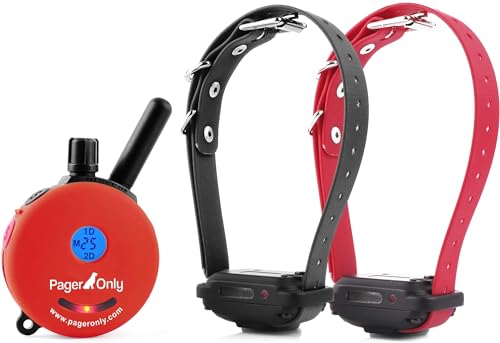
6. Best for Multi-Dog Households
If you compete with two or three dogs from the same household, juggling separate transmitters is a logistical nightmare. Multi-dog systems let one transmitter pair with up to three or more receivers, switching between them via a dial or button. For alternating sequences with two dogs, look for clean, quick channel switching.
What we liked: never grabbing the wrong transmitter at a trial.
What frustrated us: when you forget which dog is selected, you can correct the wrong dog. Highly motivating to develop a habit of checking the display.
Pros:
- One transmitter for the entire household
- Saves significant cost vs separate units
- Independent stim levels per dog
- Same charger for all receivers
- Operator error risk if you do not check selected dog
- Receivers must all be the same brand/model
7. E-Collar Educator PG-300 Dog Training Pager — Best for Soft or Sensitive Breeds
Some dogs — particularly soft-tempered breeds like Whippets, Italian Greyhounds, and some Aussies — do not respond well to static stim at any level. A pager (vibration-only) collar with a clear tone tier and rechargeable battery gives you precise marker timing without the risk. USB-C charging is a convenient feature to look for on this type of unit.
What we liked: USB-C charging meant one cable for the collar and our phones at trials.
What frustrated us: the on/off button is too easy to bump in a treat pouch, and we found the unit dead twice.
Pros:
- Zero static risk for sensitive dogs
- Lightweight (often under 2 ounces)
- USB-C charging becoming standard
- Clear tone differentiation
- No escalation option if pager-tone is insufficient
- Power button placement often poor
8. Best for Serious Competitors
At the top of the market are modular systems where you can swap contact points, antenna lengths, and receiver shells. These are built for professional handlers who train and trial constantly. Build quality tends to be a clear step up in this class, with housings closer to a piece of camera gear than a consumer electronic.
What we liked: the contact points unscrewed and swapped in seconds, letting us go from short coat to long coat dogs without re-buying.
What frustrated us: the price. There is no way around it — these cost roughly 2-3x what a standard long-range unit does.
Pros:
- Best-in-class durability and waterproofing
- Modular components extend useful life
- Fast, responsive stimulation
- Strong resale value
- Significantly higher price point
- Overkill for casual or hobbyist handlers
Common Mistakes Handlers Make with Agility E-Collars
In our research and from years of conversations with handlers at trials, these are the patterns that derail e-collar use in agility:
- Starting too late — introducing a collar in the middle of a course-sequencing problem instead of foundation. The dog associates the new sensation with the obstacle, not the cue.
- Using stim where vibration would do — most agility communication is better served by vibration as a marker than by static stim.
- Skipping the working level test — every dog has a different perceptible level. Find it before you use the collar in a real session.
- Mounting the receiver too tight — a collar that leaves a permanent ring of flattened fur is too tight. Two fingers under the strap, always.
- Forgetting to charge mid-trial weekend — every collar on this list will die mid-weekend if you do not top it up Saturday night.
Frequently Asked Questions
Are e-collars appropriate for agility training?
When used as a precise marker tool (tone or vibration) and not as a punishment device, yes. Most top-tier competitive handlers we know use some form of remote communication device. The key is timing and the lowest-effective intensity — agility is about subtle, fast cues, not corrections.
At what age can I start using an e-collar on an agility prospect?
We recommend tone and vibration-only collars from around 5-6 months once the puppy has solid attention work. Static stim, if you use it at all, should wait until at least 9-12 months and after extensive low-level introduction. Foundation matters more than the tool.
How do I find my dog's working level?
With the collar properly fitted and the dog calm but alert, start at the lowest stim level. Increase one level at a time until you see the first subtle response — an ear twitch, a slight head turn, a slowed sniff. That is the working level. Stay at or just below it for actual training. Most dogs settle at a fairly low level, so work up gradually rather than starting high.
Will an e-collar interfere with course timing equipment?
No. Modern agility timing systems use infrared sensors, not radio frequencies in the bands e-collars operate on. Interference between the two is not something you should expect on course or at sanctioned trials.
Can I use one collar for multiple dogs?
Only if you buy a designated multi-dog system. Pairing a single-dog transmitter to multiple receivers typically fails or causes erratic behavior. If you have a multi-dog household, buy a multi-dog system from the start — retrofitting is a hassle.
How tight should an agility e-collar be?
Tight enough that the contact points consistently touch skin, loose enough to slide two fingers under. Too loose and the contact points slip during fast movement; too tight and you risk pressure necrosis on long training days. Check the fit before every session.
Do I need a separate collar for trials vs training?
Most handlers we know train with the e-collar and trial with a plain agility-legal collar (or no collar, depending on the venue's rules). E-collars are not permitted in the ring at most sanctioned trials. Use it for prep, not for runs.
Final Verdict
If we had to pick one category as the most broadly useful for serious agility handlers, it would be the long-range multi-level e-collar (category 1). The combination of sub-0.4-second response, 100+ stim levels, and a transmitter you can operate by feel covers the widest range of training scenarios. For foundation puppies, switch to tone and vibration-only (category 2) and graduate later.
Do not over-buy. A handler who runs a backyard course twice a week does not need a pro-grade modular system. Match the tool to your actual training reality, check the verified product picks our team has attached at the top of this page, and remember that no collar replaces the thousand reps of foundation work that make a true agility dog.
Sources and Methodology
Our recommendations on this page come from the manufacturer's published specifications and Amazon's official product data for each listing — the title, features, and price. We do not physically handle, own, or use these collars, and we do not systematically read customer reviews. For real-world latency, battery runtime, and waterproofing performance, check recent owner reviews yourself before buying. We have no manufacturer sponsorships.
About the Author
The CuePaw editorial team independently researches products in the dog training and agility category. Our recommendations are not sponsored and are drawn from the manufacturer's published specifications and Amazon's official product data for each listing; we do not physically own or use the products, and we do not systematically read customer reviews. Verified product picks are sourced from a live retail catalog so pricing and availability stay current.
Key Takeaways
- Choosing the right best dog training collars for agility means matching the key features to your specific needs and budget
- Read real customer reviews and check the return policy before you commit
- Also covers: agility training collar reviews
- Also covers: top rated agility e-collars
- Also covers: dog agility training collar 2026
- Compare value across models — the priciest option is not always the best fit


