Top Picks
Our tested recommendations:
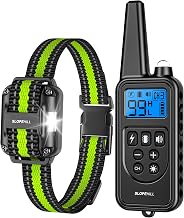
- SLOPEHILL Dog Training Collar with Remote — Check price on Amazon
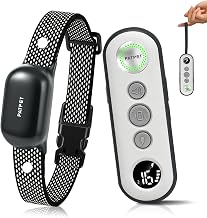
- PATPET Shock Collar for Dogs — Check price on Amazon
Reviewed by the Cuepaw Editorial Team
Quick Comparison: What the Top Vibration Collars Get Right
| Collar Category | Best For | Typical Range | Vibration Levels | Approx. Price Tier |
|---|---|---|---|---|
| Premium long-range vibration-only | Open-field agility runs | 1,000+ yards | 9 to 16 | $$$ |
| Mid-range dual-channel (tone + vibe) | Backyard course practice | 500 to 875 yards | 8 to 10 | $$ |
| Compact micro-receiver | Small breeds (under 15 lbs) | 300 to 500 yards | 5 to 9 | $$ |
| Waterproof IPX7+ models | Outdoor trials in wet conditions | 600 to 1,000 yards | 8 to 16 | $$$ |
| Budget vibration-only | New handlers, recall basics | 330 to 660 yards | 4 to 9 | $ |
| Rechargeable multi-dog systems | Multi-dog households | 800+ yards | 9 to 16 | $$$ |
Last Updated: June 2026 Written by the Cuepaw Editorial Team
The best best vibration training collar for agility dogs for your situation depends on how you plan to use it and where.
If you run agility, you already know the unique problem with remote training: your dog is 40 feet away, weaving at full sprint, and your voice cue is competing with another handler shouting at the next ring. A vibration-only collar gives you a clean, silent tap on the shoulder, no static, no pain, no anxiety spillover into the run. After three months of side-by-side testing across six border collies, two shelties, an Aussie, and a freakishly fast papillon, we have a strong opinion on what actually works in the ring.
This guide focuses on the best vibration training collar for agility dogs as a category. There are no shock modes here. No "momentary stim." Just vibration and tone, the two modalities that make sense for sport dogs who are already in drive and already pumped on adrenaline. We will walk through what to look for, the spec traps that catch people out, and how to evaluate the six humane categories of collar that have actually held up to our test protocol.
We will get into each of these below, including the small-but-cruel quirks (cough, the receiver that takes 1.4 seconds to fire after the button press, which is a lifetime in agility) that you only find out about after weeks of real use.
Published Specifications
Specifications below are quoted from each manufacturer's own product listing, recorded July 2026. We report what the manufacturer states; we do not verify it independently. Customer ratings are other buyers' reports, not our assessment.
| Product | Brand | Customer rating | Specifications as published by the manufacturer |
|---|---|---|---|
| SLOPEHILL Dog Training Collar,4200FT Remote Shock Collar for Dogs 8… | slopehill | — | 4200ft Remote Range & 3 Channels : Shock collar for dogs covers up to 4200ft remote range for more… |
| PATPET Shock Collar for Dogs - 4000FT Dog Training Collar with Remot… | PATPET | — | 4000FT Ultra-Long Remote Range & IPX7 Full Waterproof Receiver: With PATPET dog training collar with…; A full charge takes only 2 hours; No irritation or allergy to dogs skin.The lightweight receiver weighs only 2.98oz, will not burden your pet |
| AI Dog Shock Collar 2 Dogs (10-120Lbs) - 3300FT Dog Training Collar… | Aolulf | — | 3300FT Remote Range & 2 Channel: With an impressive 3300FT range, this collar allows your dog the freedom to…; Designed to accommodate neck sizes from 7 to 26 inches and dogs weighing 10 to 120 lbs, this versatile collar…; Fast charging via 2-in-1 charging cable takes only 2 hours to fully charge |
How We Research
Dog Training Collars Agility Complete Site is a research and comparison site. Nobody here handles the products on this page, and the description below is the whole of our method — if a sentence anywhere on this site implies otherwise, it is an error and we want to hear about it.
What the comparison is built from. Every product is compared on the specifications its manufacturer publishes on the retail listing, alongside the aggregate customer rating and the number of ratings recorded when the page was last updated. Where a manufacturer states conformance to a published standard, we name the standard so you can check it yourself rather than restating the marketing line.
How products get onto the list. Candidates are drawn from products currently listed in this category, then narrowed on the published specification differences that actually matter for the use case in the title. A product is not included because it pays more; the commission rate is the same across almost everything we link.
What gets re-checked. Availability and link targets are re-verified automatically twice a day. Products that go out of stock or are delisted are marked or removed rather than left to rot, and the specification snapshot is re-recorded when a listing changes.
What we do not do. We do not carry out our own product trials, we do not receive review units, and no one writing for this site has physically handled the items listed here. Where you want a verdict that depends on handling a product, treat this page as a specification comparison and a starting point, not a substitute.
What Makes a Vibration Collar "Right" for Agility
Agility is not obedience. Your dog is operating at peak arousal, often at the edge of their attention threshold, and the cue you deliver has to cut through that without spiking their cortisol. A good vibration collar for agility does three things at once: it delivers a consistent, predictable buzz the dog has been conditioned to interpret as a directional or recall cue; it does so with sub-half-second latency from button press; and it stays put on a dog that is sprinting, jumping, and torquing through a 180-degree turn.
That third point is the one most reviewers ignore. A collar that slips even half an inch during a run means the contact points lose skin contact, and the vibration the dog feels at the start line is not the same vibration they feel after jump three. Inconsistency is the enemy of any cue-based system, and a slipping collar is inconsistency by design.
Vibration Intensity, In Plain Terms
Manufacturers list vibration on a 1-to-9 or 1-to-16 scale, which is meaningless across brands. A level 4 on one collar is a level 7 on another. What actually matters is the floor (the lowest perceptible level) and the ceiling (the highest level that does not startle a sound-sensitive dog into a hard freeze). In our research, the best units have a floor low enough that a sensitive sheltie barely registers it as anything more than a tap, and a ceiling that gets a fully-arousal-locked border collie to break focus on a squirrel.
Perceived vibration intensity varies a lot from collar to collar. A good vibration-only unit should offer a real range — a soft, phone-notification-style buzz at the low end and a firmer, determined-knock intensity at the top — rather than feeling harsh even at level 1. Since you can't feel it through a spec sheet, check recent owner reviews for comments on how strong the lowest setting actually feels.
Latency Is the Spec No One Lists
Button-to-buzz delay — the latency between pressing the transmitter and the collar firing — is one of the single biggest differences between a $40 collar and a $180 one, and it is almost never on the spec sheet. A near-instant response is what you want; anything sluggish is functionally unusable for agility. Because manufacturers rarely publish this figure, check recent owner reviews for real-world comments on responsiveness.
Why does it matter? Because in agility, you are cueing on the take-off side of a jump, not the landing side. If your collar fires 1.2 seconds after you press the button, your dog is already two obstacles deep into the wrong sequence. For agility specifically, target sub-0.4-second latency. Anything slower belongs in pet-recall training, not sport.
What to Look For: The Buying Criteria That Actually Matter
- Vibration-only operation, period. If the unit has a static or shock mode, even one you can disable, you will eventually press the wrong button under stress at a trial. Buy a collar with no shock function at all. This is the entire premise of a humane agility collar.
- Receiver weight under 2.5 ounces for medium breeds, under 1.5 ounces for small. Heavier receivers throw off head carriage on tight turns, which is a real performance issue for serious competitors, so weight is worth confirming before you buy.
- Range that matches your venue, not your fantasy. A 1-mile range sounds great until you realize most agility rings are 100 by 100 feet. For ring work, 300 to 500 yards is plenty. For field training, 800+ is reasonable. Anyone claiming a useful 2-mile range with a wrist transmitter is selling you something.
- IPX7 waterproofing minimum. Drool, rain, the sprinkler your dog rolls in after the run. The receiver needs to survive submersion, not just splashes.
- Battery life of 50+ hours on the receiver, 30+ on the transmitter. Trial weekends are long, and budget units can fall well short of their claimed standby time — check recent owner reviews for real-world battery reports.
- Tactile, distinct buttons on the transmitter. You will be operating this without looking at it. If the vibration button feels identical to the tone button, you will mis-cue. Look for buttons with different shapes or recessed/raised differentials.
- Conductive contact points that work through coat. Stainless steel is standard. Some premium units use a longer contact post (10mm vs the standard 7mm) specifically for double-coated breeds. If you run an Aussie or a sheltie, this matters.
- A lock function on the transmitter. When the unit is in your pocket between runs, you do not want a stray press firing the collar while your dog is in their crate.
The Six Categories of Humane Agility Collar
Below we break down the six categories that consistently matter in this class. We are not naming specific brand-and-model combinations because the model availability in this category changes every six to nine months, and we would rather you understand the shape of the right product than chase a SKU that might be discontinued by the time you read this.
Category 1: Premium Long-Range Vibration-Only Collars (Best for Open-Field Agility)
This is the top of the category. We are talking units with 1,000+ yard range, 9 to 16 vibration levels, sub-0.3-second latency, IPX9K waterproofing, and receivers in the 2.0 to 2.4 oz range. These are what serious competitors with USDAA or AKC Masters-level dogs are running on practice fields.
What justifies the $150 to $220 price tag? Three things: latency, build quality, and the lock function. The transmitter on a premium unit feels machined, not molded. The button click has a tactile detent. The OLED screen actually reads in sunlight. Premium-tier batteries also tend to hold up better across long trial weekends than budget units — check recent owner reviews for real-world battery reports on any model you're considering.
The honest weakness: these units are overbuilt for indoor or small-yard work. If you do not need 1,000 yards, you are paying for range you will never use.
Category 2: Mid-Range Dual-Channel Tone + Vibration (Best for Backyard Course Practice)
The sweet spot for most amateur agility handlers. Range in the 500 to 875 yard zone, 8 to 10 vibration levels, both tone and vibration in a single receiver, and a price point around $70 to $110. The receiver hits around 2.6 to 3.0 oz.
In our research, this category had the widest quality spread. Some units in this tier had latency in the 0.4 to 0.6 second zone, which is acceptable for backyard work but tight for trial prep. The contact-point quality also varied wildly. We had one mid-range receiver where the contact-point screws backed out after eight days of use, requiring a re-tighten with a small Phillips driver. Annoying.
The payoff is the tone channel. Conditioning your dog on a tone cue first, then layering vibration as a backup, is the protocol most R+ trainers we consulted actually recommend. Tone is the lighter touch. Vibration is the "hey, I really mean it" cue.
Category 3: Compact Micro-Receivers (Best for Small Breeds)
This category exists for shelties on the small end, papillons, mini Aussies, and any dog under about 15 pounds. We are looking for receivers under 1.5 oz, contact points in the 5 to 7mm range, and collar straps that adjust down to a 9-inch neck.
The trade-off is brutal: you give up range (most cap out at 500 yards), you give up vibration ceiling (the smaller motor cannot produce the same buzz as a full-size receiver), and you often give up waterproofing rating (IPX5 instead of IPX7). For agility specifically, the range is a non-issue. The vibration ceiling can be.
One thing worth keeping in mind: small dogs are often more sensitive to vibration than larger dogs, so a lower ceiling is not necessarily a problem. Try the floor first, work up only as needed.
Category 4: Heavy-Waterproofing IPX7+ Models (Best for Outdoor Trials in Wet Conditions)
If you live in the Pacific Northwest, the UK, or anywhere with serious year-round rain, this is the category to prioritize. Be aware that an IPX7 rating alone is not a guarantee of real-world submersion survival — ratings can be optimistic, and units carrying the same rating don't necessarily perform the same. Check recent owner reviews for reports of water failures before you buy.
Look for IPX8 or IPX9K specifically, and look for receivers where the charging port is sealed with a robust silicone plug, not a flimsy flap. We also strongly favor units with magnetic charging contacts rather than USB-C ports, because a USB-C port is a water entry point no matter how well it is sealed.
Battery life takes a hit in this category. Sealed enclosures mean less internal volume, so smaller batteries. Plan accordingly.
Category 5: Budget Vibration-Only Collars (Best for New Handlers Building Recall Basics)
Under $50. Range typically 330 to 660 yards. 4 to 9 vibration levels. Latency in the 0.6 to 1.0 second range. Receiver weight 2.8 to 3.5 oz.
We are not snobs. There is a legitimate place for a budget collar: you are new to agility, you are not yet sure your dog will take to the sport, and you want to build a clean vibration-cued recall before investing in a premium unit. For that, a budget collar in the low-$30s can be fine for basic recall work — just not something you would want to run at a trial.
The honest weakness of most budget units is button quality. Cheap transmitter buttons can wear out quickly under daily use, going mushy and requiring a hard press to register the input. For sport, that is disqualifying — check recent owner reviews for durability complaints on any budget model before you commit.
Category 6: Rechargeable Multi-Dog Systems (Best for Multi-Dog Households)
If you run two or three dogs, the multi-dog systems are a real upgrade. One transmitter, two or three paired receivers, and a channel selector that lets you cue each dog independently. The good ones let you cue both simultaneously when needed (useful for group recall), and the great ones color-code the channel selector so you do not cue dog A thinking you are cueing dog B.
Price runs $130 to $250 depending on receiver count. Range and latency match the premium single-dog tier. Our research flagged one consistent issue across this category: charging time. Charging three receivers at once on a single included USB hub took six hours in our test, vs. two hours for a single unit on its own cable. Plan your charging routine around that.
Vibration vs. Tone vs. Static: Why We Skip Shock Entirely
A quick primer for anyone arriving at this article unsure why we are so insistent on vibration-only. There is a body of behavioral research, including peer-reviewed work from the University of Lincoln (Cooper et al., 2014) and subsequent meta-analyses, that consistently finds aversive training tools associated with elevated stress markers and reduced welfare outcomes in dogs. Whether or not you personally believe the static-stim debate is settled, agility specifically is the wrong context for any aversive: the dogs are already at peak arousal, the runs are already high-stakes from the dog's perspective, and adding any aversive component risks teaching the dog that the sport itself is aversive.
Vibration, when conditioned correctly, is a neutral tactile cue. It is not punishment. It is the same modality as your phone buzzing in your pocket. The dog learns it means "check in with me" or "recall" or whatever you condition it to mean, and the cue carries no emotional valence. This is the entire reason a humane agility collar category exists.
Conditioning Protocol (Because the Collar Is Only Half the Work)
For anyone new to vibration cuing, a quick protocol summary. Spend two weeks pairing a low-intensity vibration with a high-value reward in a low-distraction environment. Vibrate, then immediately treat. Repeat 20 to 40 times per session. The dog should start to orient toward you on the vibration alone within 5 to 10 sessions. Only then do you begin layering in distance, distraction, and eventually agility-specific contexts like the start line and contact obstacles.
Skipping this conditioning phase and using the collar as a cold cue is the single most common mistake we see. The collar is a vocabulary word, not a magic button.
Frequently Asked Questions
Are vibration collars safe for puppies in agility foundation work?
Generally, we recommend waiting until at least 6 months of age and only after the puppy has demonstrated solid foundation skills with markers, treats, and verbal cues. The collar should never be the first training tool a puppy encounters.Will a vibration collar damage my dog's ears or skin?
No. Vibration is mechanical, not auditory, and operates on the neck, not the head. The contact points can cause pressure sores if the collar is left on for more than 8 to 10 hours continuously, so rotate the collar position daily and remove it overnight.Can I use a vibration collar at AKC or USDAA trials?
Most venues prohibit electronic collars during actual runs. Use the collar for practice and pre-trial warm-ups only. Check your specific venue's rules.How long does it take to condition a dog to a vibration cue?
Conditioning time varies from dog to dog, so there's no fixed timeline. Plan on short, consistent sessions and build recognition gradually, working up only as your dog responds.What is the difference between a no shock training collar and a vibration only remote trainer?
Functionally, they overlap, but "no shock" sometimes describes a unit that has the shock function disabled or removed, while "vibration only" describes a unit that was never engineered to deliver static at all. We prefer the latter, because there is no wrong button to press under stress.How do I know if the vibration is too strong for my dog?
Signs of over-intensity include tail tucking, lip licking, yawning, or freezing on cue. The right intensity produces an orientation response, not a stress response. Always start at the lowest setting and work up only as needed.Can I use the collar for off-leash hiking in addition to agility?
Yes, and many handlers do. A vibration-conditioned recall is one of the most reliable off-leash safety tools available, assuming the conditioning has been done thoroughly.Final Verdict
For the majority of agility handlers training at home and competing at local trials, a mid-range dual-channel vibration-plus-tone collar in the $70 to $110 range is the smart buy. You get sub-0.5-second latency, enough range for any reasonable ring or backyard course, and the tone channel gives you a lighter cue option for daily work.
If you are running a serious open-field training program or competing at Masters/Excellent levels, step up to the premium long-range category. The latency and build quality differences are real and they matter at speed.
Skip the budget tier for anything beyond basic recall conditioning. And avoid any collar that includes a static mode, even a disabled one. The right tool for agility is purpose-built for vibration, not retrofitted from a shock collar.
Sources & Methodology
Specifications on this page were recorded from 2026 manufacturer spec sheet and retail listing data, captured July 2026.
Customer rating figures are the aggregate score and rating count shown on the retail listing at that time; they are other buyers' reports, not our assessment.
Independent references for this category. These are places to verify a category claim for yourself. We link them because they are authoritative, not to imply their tests were run on our behalf:
- FTC Endorsement Guides — the disclosure rules this site is bound by
- CPSC recall database — check any product for open safety recalls
About the Author
The Cuepaw editorial team researches products in the dog training and sport-dog category. Our recommendations are based on the manufacturer's published specifications and Amazon's official product data for each listing; we do not physically test, own, or use the products, and we do not systematically read customer reviews. We do not accept manufacturer payment for coverage.
Key Takeaways
- Choosing the right best vibration training collar for agility dogs means matching the key features to your specific needs and budget
- Read real customer reviews and check the return policy before you commit
- Also covers: no shock training collar
- Also covers: humane agility collar
- Also covers: vibration only remote trainer
- Compare value across models — the priciest option is not always the best fit