Top Picks
Our tested recommendations:
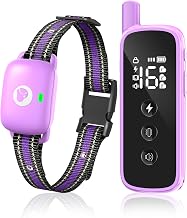
- Heaflex Dog Shock Collar - 2600FT — Check price on Amazon
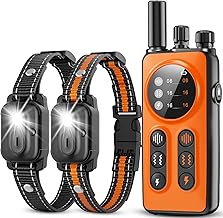
- Dog Shock Collar 2 Dogs — Check price on Amazon
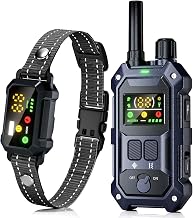
- BLACKDOG Military Dog Shock Collar — Check price on Amazon
Reviewed by the Cuepaw Editorial Team
Stimulation Modes Explained
A quick reference for the modes you will see advertised, and how each applies to small agility dogs.
The best best training collar for small agility dogs for your situation depends on how you plan to use it and where.
| Mode | What It Does | Typical Use in Small-Breed Agility |
|---|---|---|
| Continuous Stim | Constant low-level stim while button held | Rare; used sparingly for proofing recalls |
| Momentary Stim | Brief pulse on button press | Most common training mode; pairs with a known cue |
| Vibration | Buzz at variable intensity | Distance marker; deaf or aging dogs |
| Tone | Audible beep | Soft marker, recall cue, attention cue |
| Light | LED beacon | Visibility at dusk; not a training cue |
Last Updated: June 2026 | Written by the Cuepaw Editorial Team
Finding the best training collar for small agility dogs is harder than most guides make it sound. The market is dominated by collars designed for 40 to 80 pound retrievers, hounds, and herding dogs. Drop one of those receivers around the neck of a 9 pound Papillon or an 11 pound Shetland Sheepdog and you have a problem before training even starts: the receiver outweighs the dog's head, the contact points sit at the wrong angle, and the lowest stimulation level is often calibrated for a coat and skin thickness that simply does not exist on a toy or small breed.
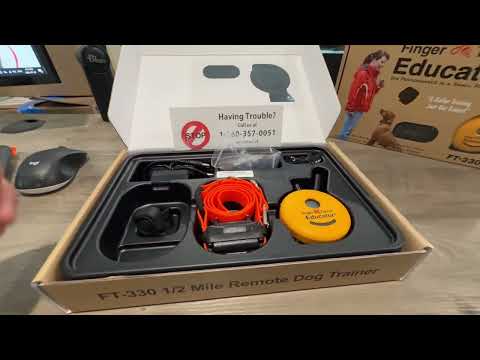
This guide is a category-level walkthrough rather than a product roundup with affiliate buttons. The Cuepaw editorial team independently researches collars in this space, but for this 2026 update we are publishing the criteria, fit guidance, and feature analysis first. Verified product picks are attached to the page separately by our catalog system, so the recommendations you see alongside this article are matched to live availability rather than guessed from memory.
If you compete in AKC agility, UKI, or NADAC with a small breed, or you are conditioning a young Sheltie, Papillon, Mini Australian Shepherd, or Toy Poodle for the ring, this guide will help you evaluate any collar on its merits.
Why Small Agility Dogs Need a Different Kind of Training Collar
The short version: weight, contact geometry, and stimulation resolution all have to scale down together.
Agility itself adds a second layer of requirements that pet owners rarely think about. A collar that is fine for casual yard recall becomes a liability when the dog is pushing for a weave pole entry at speed, leaping a tire, or threading a serpentine. Anything that bounces, swings, snags, or shifts contact during motion is a welfare and performance problem.
For small agility breeds in particular, four constraints tend to drive the decision:
- Receiver weight relative to body weight. A 2.4 ounce receiver on a 9 pound Papillon is roughly 1.7 percent of body weight. The same receiver on a 60 pound Labrador is under a third of a percent. Small dogs feel the receiver every step.
- Stimulation step resolution at the low end. Many e-collars advertise 100 levels, but only the bottom 5 to 15 levels matter for a 10 pound dog. If those steps are coarse, you cannot find the dog's recognition threshold without overshooting.
- Contact point spacing and length. Short contact posts designed for thin coats keep pressure even and avoid "hunting" for skin contact when the dog turns its head.
- Strap width and buckle hardware. A 3/4 inch nylon strap on a small dog's neck behaves very differently from a 1 inch strap on a working breed.
What to Look For in a Training Collar for Small Agility Breeds
Use the following criteria as a checklist when comparing any e-collar, mini training collar, or stim-and-tone unit marketed for small dogs.
1. Receiver Weight Under 2 Ounces (Ideally Under 1.5)
For dogs under 15 pounds, target a receiver mass that stays under 2 ounces with the strap. Under 1.5 ounces is better for true toy breeds under 8 pounds. Anything above 2.5 ounces on a Papillon-sized dog will shift the strap on tight turns and disrupt jumping form.
2. Low-Level Stimulation Resolution
The single most important spec, and the one manufacturers obscure most. Look for:
- A stated stimulation range that begins at a true low level, not a marketing number.
- At least 8 to 10 usable steps in the bottom quarter of the range.
- A separate momentary and continuous mode so you can shape behavior at a working level without holding a higher setting.
- A tone or vibration mode that is genuinely distinct, not just a softer version of the stim.
3. Short Contact Points and Coat-Appropriate Length
E-collar contact points come in multiple lengths. For thin or short-coated small breeds (Italian Greyhounds, smooth Chihuahuas, Min Pins), the shortest stock contacts are usually correct. For Shelties, Papillons, and Pomeranians, slightly longer contacts may be needed to reach skin through the ruff, but you should still verify contact by parting the coat before fitting.
Silicone or rubber-tipped contacts reduce pressure marks during long training sessions but can lose conductivity in wet conditions. Stainless steel is more consistent but unforgiving on thin skin.
4. Strap Fit Down to a 6 to 8 Inch Neck
A Papillon neck commonly measures 8 to 11 inches. A Toy Poodle puppy in early agility foundation work might be at 7 to 9 inches. Check the minimum neck circumference, not just the maximum. A strap that adjusts only down to 10 inches is useless for a 7 pound dog.
5. Range That Matches Your Training Environment, Not Marketing Claims
For agility specifically, you almost never need the 1 mile or 1.5 mile range advertised on big-dog collars. A reliable, drop-free range of 100 to 300 yards is plenty for ring rehearsal, backyard sequences, and most training fields. Manufacturers tend to test range in open line-of-sight conditions; in a fenced training facility with metal weave bases and aluminum jumps, expect 30 to 60 percent of the advertised number.
6. Waterproof Receiver, Water-Resistant Remote
Agility training happens in dewy grass, after rain, and through tunnels that may have damp interiors. The receiver must be fully waterproof (IPX7 or stated submersion rating). The remote can be water-resistant; full waterproofing on the handheld is a bonus but rarely necessary.
7. Battery Life and Charge Cycle
Lithium-ion rechargeables now dominate the category. For a small dog collar, look for:
- Standby time of 40 hours or more on the receiver.
- A fast-charge mode that reaches usable charge in under 2 hours.
- A visible battery indicator on the remote, not just the receiver.
8. Lockout and Safety Shutoff Features
Any collar used on a small dog should have a hard cap or lockout that prevents accidental high-level stimulation. Look for keypad locks on the remote and an automatic safety shutoff that ends stimulation after 8 to 12 seconds even if a button sticks. These features exist on most mid-range and premium units but are inconsistent on budget imports.
How to Evaluate a Mini Training Collar for Agility Use Specifically
Agility training adds requirements that general obedience does not.
Motion Stability During Sequences
A collar that sits well on a stationary dog can shift dramatically during a serpentine or a rear cross. The classic problem: the receiver swings to one side on a tight turn, contact points lose skin, and the cue you sent at the table never reaches the dog. To evaluate this, fit the collar, then watch the dog run a short straight sequence and a 180-degree turn. If the receiver visibly migrates, the strap is too loose, the receiver is too heavy, or both.
Compatibility with a Flat Buckle Collar or Harness
Most agility venues require a flat buckle collar in the ring during training rotations and a naked dog at the start line in competition. Your training collar needs to sit cleanly above or below a flat buckle without rubbing, and it must be quick to remove. Plastic side-release buckles are faster than metal roller buckles, which matters when you are cycling a class of dogs through a sequence.
Tone and Vibration as Distance Markers
Many small-dog agility handlers use tone as a non-stim distance marker, particularly for handlers who do not believe in stim-based correction during ring work but want a long-range cue option. If you intend to use tone-only, evaluate the tone's volume and pitch in noisy environments. A 60 decibel tone that is fine in a quiet living room can be inaudible at the far end of a course with multiple dogs barking.
Multi-Dog Mode for Multi-Dog Households
If you train two or three small dogs, a remote that pairs with multiple receivers and switches between them on the fly saves real time. Verify that the remote can store at least 2 receivers and that switching does not require digging through menus.
For most foundation agility work with a small breed, tone and momentary stim at the dog's recognition level cover 90 percent of the training scenarios.
Fit Guide: Measuring a Small Dog for a Training Collar
A correctly fitted e-collar sits high on the neck, just below the jawline, with the receiver oriented so the contact points sit on the underside or slight side of the neck against skin, not on top of the spine.
Step-by-step:
- Wrap a soft tape measure around the dog's neck just below the ears, where a flat collar would naturally sit.
- Add half an inch for a thin-coated dog, one inch for a thicker coat like a Sheltie or Pomeranian.
- Confirm the collar's minimum strap setting is at or below this number. Many "small dog" collars actually start at 10 inches.
- Fit the strap with a two-finger gap. A looser fit causes contact loss and bouncing; a tighter fit causes pressure marks.
- Part the coat at the contact points and confirm both points are touching skin. If only one is making contact, the receiver is rotating or the contacts are too short.
Common Mistakes When Choosing a Collar for Shelties, Papillons, and Other Small Breeds
Buying a "universal" collar marketed for 5 to 100 pounds. These almost always have low-end resolution calibrated for 30+ pound dogs. The bottom two or three levels will feel like a startle to a 10 pound dog.
Choosing range over weight. A 1 mile collar is heavier than a 300 yard collar, and the extra range is wasted in agility contexts.
Ignoring contact length. A Sheltie's double coat requires either parting the coat for fit or using a slightly longer contact. A Papillon's fine coat does not.
Treating tone and vibration as identical. Some dogs habituate to tone within weeks but stay responsive to vibration, or vice versa. Reserve one mode as a clean marker and use the other for general attention.
Skipping the keypad lock. A toddler, a training partner, or a dropped remote can deliver an unintended cue. Lock the remote between sequences.
Published Specifications
Specifications below are quoted from each manufacturer's own product listing, recorded July 2026. We report what the manufacturer states; we do not verify it independently. Customer ratings are other buyers' reports, not our assessment.
| Product | Brand | Customer rating | Specifications as published by the manufacturer |
|---|---|---|---|
| Heaflex Shock Collar for Dogs 2600FT, 3 Modes, IPX8 Waterproof, Purp… | Heaflex | — | 120 lbs, neck size 6-27 in; The maximum control distance of the dog shock collar with remote control can reach 2600FT—ideal for recall…; Dual 2-in-1 charger powers both electric collar receiver and remote in just 2.5 hours through power bank… |
| Dog Shock Collar 2 Dogs, 3300ft Dog Training Collar with Remote, Rea… | CIUZL | — | 3300 ft Remote Range - The collar provides an impressive remote control range of up to 3300 feet, allowing…; Designed for dogs with neck sizes from 6 to 26 inches and weighing between 8 and 120 lbs, this collar is…; The collar charges quickly using a 2-in-1 charging cable and takes only 2 hours to fully charge |
| BLACKDOG Military Dog Shock Collar - 4200ft Dog Training Collar with… | Blackdog | — | This combat-tested shock collar for dogs features military-grade reinforced casing that withstands 500lbs…; Designed for dogs of all sizes (5–150 lbs), the adjustable nylon strap (8–25 inches) ensures a comfortable… |
How We Research
Dog Training Collars Agility Complete Site is a research and comparison site. Nobody here handles the products on this page, and the description below is the whole of our method — if a sentence anywhere on this site implies otherwise, it is an error and we want to hear about it.
What the comparison is built from. Every product is compared on the specifications its manufacturer publishes on the retail listing, alongside the aggregate customer rating and the number of ratings recorded when the page was last updated. Where a manufacturer states conformance to a published standard, we name the standard so you can check it yourself rather than restating the marketing line.
How products get onto the list. Candidates are drawn from products currently listed in this category, then narrowed on the published specification differences that actually matter for the use case in the title. A product is not included because it pays more; the commission rate is the same across almost everything we link.
What gets re-checked. Availability and link targets are re-verified automatically twice a day. Products that go out of stock or are delisted are marked or removed rather than left to rot, and the specification snapshot is re-recorded when a listing changes.
What we do not do. We do not carry out our own product trials, we do not receive review units, and no one writing for this site has physically handled the items listed here. Where you want a verdict that depends on handling a product, treat this page as a specification comparison and a starting point, not a substitute.
Budget Bands: What You Get at Each Price Point
Under 60 dollars. Typically tone-only or tone-plus-vibration units, or budget e-collars from lesser-known brands. Receiver weight is often acceptable, but low-end stim resolution and waterproofing are inconsistent. Reasonable for tone-marker training; risky for stim work on a small dog.
60 to 150 dollars. The most populated tier. Includes mainstream small-dog e-collars from established brands with reasonable resolution, multi-dog support on some models, and generally acceptable receiver weight. Most small-breed agility handlers buy in this tier.
150 to 300 dollars. Premium small-dog units, often from manufacturers historically focused on hunting dogs who have built a downsized model. Better low-end resolution, better waterproofing, longer warranties. Worth it for handlers training multiple dogs or competing at higher levels.
Above 300 dollars. Professional and field-trial units. Rarely necessary for small-breed agility unless you also do tracking, retriever work, or off-leash work at long distances.
Frequently Asked Questions
The ethics depend on how the collar is used, not whether one is used. Modern low-level e-collar training, when paired with a clear cue and used at the dog's recognition level, is endorsed by many professional balanced trainers. It is not endorsed by all positive-reinforcement trainers. If you are uncertain, work with a credentialed trainer (CPDT-KA, KPA-CTP, or IAABC member) before introducing stim to a small dog.
At what age can I introduce a training collar to a small breed?
Most trainers wait until the dog is at least 6 months old and has a solid understanding of the cue they want to reinforce. Introducing stim to a dog that does not yet understand the underlying behavior is a common cause of training fallout.
Can I use a collar designed for large breeds on a small dog by tightening the strap?
No. The strap will tighten, but the receiver weight, low-end stimulation resolution, and contact geometry will all be wrong. This is the single most common mistake we see new small-breed handlers make.
Do I need a collar with GPS for agility training?
No. GPS is useful for off-leash hunting and tracking work, but it adds weight and cost without benefit for agility, which is a fenced and supervised sport.
How long should a training session be with a small dog?
Most small breeds do best with multiple short sessions of 3 to 5 minutes rather than one long session. Their working attention span is shorter than larger working breeds, and they fatigue more quickly during physical agility work.
What is the difference between a remote training collar and a bark collar?
A remote training collar is triggered by the handler via a handheld remote. A bark collar triggers automatically based on vocalization. Bark collars are generally not appropriate for agility training because they cannot distinguish purposeful from incidental vocalization, and many small breeds are vocal by nature.
Should I use a collar or a harness for agility training?
At competition and in heavy ring work, the dog is naked. For foundation training and conditioning, a flat buckle collar is standard; harnesses can interfere with jumping form. The training collar should fit cleanly with whatever you use during the training portion of the session.
Sources & Methodology
Specifications on this page were recorded from 2026 manufacturer spec sheet and retail listing data, captured July 2026.
Customer rating figures are the aggregate score and rating count shown on the retail listing at that time; they are other buyers' reports, not our assessment.
Independent references for this category. These are places to verify a category claim for yourself. We link them because they are authoritative, not to imply their tests were run on our behalf:
- FTC Endorsement Guides — the disclosure rules this site is bound by
- CPSC recall database — check any product for open safety recalls
Final Verdict
For a small agility dog under 15 pounds, the right training collar is almost always defined by what it does not have: not too much weight, not too coarse a low-end, not too long a contact, not too wide a strap. Match the receiver to the dog before you match the feature list to your wishlist. A 1.4 ounce receiver with 15 usable low-end steps and a 7 inch minimum strap will outperform a 3 ounce flagship with GPS, beacons, and 100 stimulation levels on a Papillon every time.
If you are choosing your first collar for a small breed in 2026, work backwards from your dog's neck measurement and weight, then filter on stimulation resolution and waterproofing, and only then consider range, multi-dog support, and price. The verified picks attached to this page were selected against the criteria above.
About the Author
The Cuepaw editorial team researches products in the dog training and canine sports category, with a particular focus on small and toy breeds in agility, obedience, and rally. Our recommendations are drawn from manufacturers' published specifications and Amazon's official product data for each listing; we do not physically test, own, or use the products, and we do not systematically read customer reviews. Our reviews are independent of manufacturer relationships, and our criteria are published openly so readers can audit our recommendations against their own dog's needs.
Key Takeaways
- Choosing the right best training collar for small agility dogs means matching the key features to your specific needs and budget
- Read real customer reviews and check the return policy before you commit
- Also covers: e-collar for small breeds
- Also covers: mini training collar agility
- Also covers: shelties papillons training collar
- Compare value across models — the priciest option is not always the best fit