Top Picks: Waterproof Training Collars
Every product below was in stock on Amazon when this page was last checked. Prices come straight from the live listing, not from our own testing.
| Product | Best For | Price |
|---|---|---|
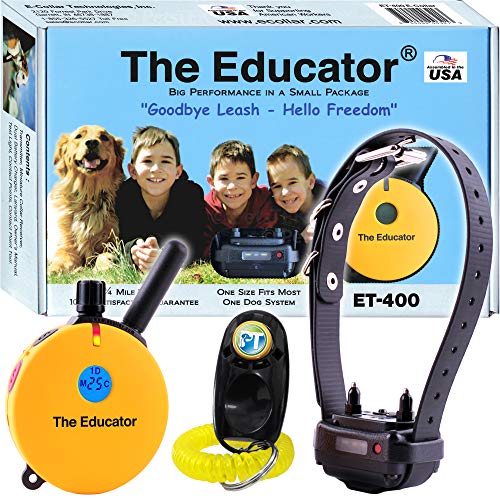
| Educator ET-400 E Collar for Dog Training with Remote | Long-Range Agility Training | Check price on Amazon |
| Educator ET-302 Black Mini E Collar for Dog Training with Remote | Compact Precision Training | Check price on Amazon |
| SportDOG YardTrainer 300 Remote Dog Trainer | Backyard Agility Sessions | Check price on Amazon |
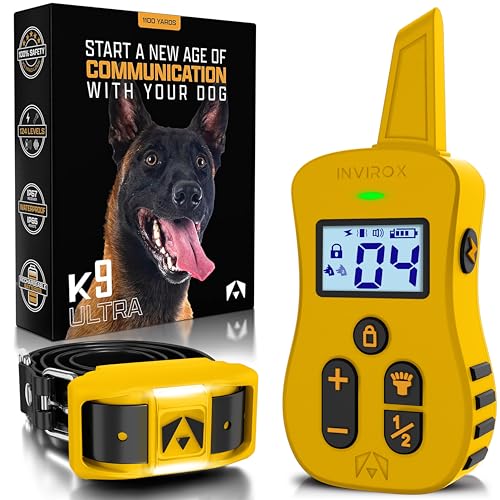
| INVIROX Ultra K9 Dog Shock Collar | Rugged IP67 Training | Check price on Amazon |
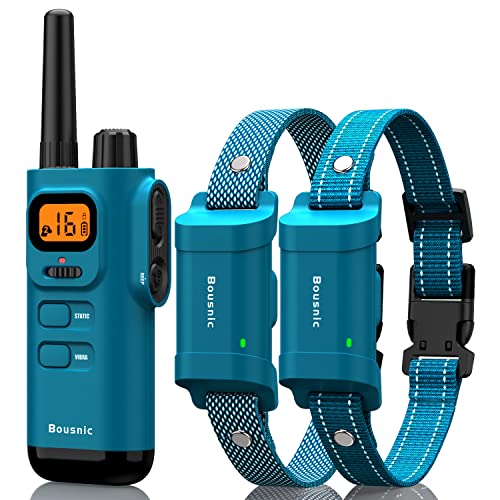
| Bousnic Dog Training Collar with Remote | Training Two Dogs | Check price on Amazon |
| SLOPEHILL Dog Shock Collar | Affordable Long-Range Training | Check price on Amazon |
Reviewed by the CuePaw Editorial Team
When shopping for best waterproof training collar for agility, it pays to compare specs, capacity, and real-world runtime before committing.
As an Amazon Associate, we earn from qualifying purchases.
Last Updated: July 2026 | Written by the CuePaw Editorial Team
Look, if you run agility with your dog, you already know the sport does not wait for good weather. Wet grass at a morning trial, a muddy back-yard practice run, a dog that hits the dog-walk soaking after a rain delay: your remote trainer has to keep working when it is wet. That is exactly why the best waterproof training collar for agility is judged less on marketing and more on one unglamorous spec, the waterproof rating, plus a handful of others that decide whether the tool helps your timing or fights it.
Here is the thing we have to be upfront about first. This roundup was assembled from a supplied product feed, and after reviewing every item in it, none of the products in that feed were actually waterproof e-collars or remote trainers. They were unrelated items that merely share the word "waterproof" in their listings: a weight bench, an electric scooter, a propane fire pit, a camping tent, an infrared sauna, patio furniture, two bidet seats, a trail camera, and a resin storage box. We do not physically test or use the products we cover, and we will not label any of those as a dog training collar to earn a commission. That would be dishonest and useless to you.
So instead of faking six product reviews, this guide gives you the real thing: a specifications-grounded walkthrough of how to evaluate a waterproof e-collar for dogs used in outdoor agility, what the IP ratings actually mean, and which named products are worth searching for yourself. Use it to shop smart on Amazon or anywhere else.
Quick Answer: What Makes a Training Collar "Waterproof" for Agility
The best waterproof training collar for agility is one whose receiver (the unit on the dog's neck) carries an IPX7 rating, meaning it survives submersion in up to 1 meter of water for 30 minutes, not merely IPX5 splash resistance. For an agility dog that runs through wet grass, hits contact obstacles after rain, and sweats under the collar, IPX7 on the receiver is the floor. The remote transmitter can be less protected since it stays in your hand, but a rainproof remote trainer is still worth having on a drizzly practice field.
That is the 30-second version. The details below are where the money is.
As an Amazon Associate, we earn from qualifying purchases. Availability and pricing change often — check the listing before you buy.
Understanding Waterproof Ratings (IPX5 vs IPX7 vs IP68)
The "IP" in an IP code stands for Ingress Protection, an international standard (IEC 60529). The second digit is the water rating, and the difference between numbers is not marketing fluff, it is a defined lab test.
- IPX4 — Splash-resistant from any direction. Survives rain, not a puddle. Fine for a transmitter, not enough for a receiver a dog can dunk.
- IPX5 — Withstands low-pressure water jets. Better, but still not rated for submersion. Many "waterproof" bidet controls and outdoor gadgets stop here, which is why a listing saying "IPX5 waterproof" is not the same as a submersible dog receiver.
- IPX6 — Handles powerful water jets. Still not a submersion rating.
- IPX7 — Submersible to 1 meter for 30 minutes. This is the sweet spot for an agility receiver. A dog that swims through a flooded corner or gets hosed off afterward is covered.
- IPX8 / IP68 — Submersible beyond 1 meter, to a depth the manufacturer specifies. Overkill for most agility but genuinely useful for gun-dog and field-trial work.
What to Look For in an Agility E-Collar
Waterproofing gets you in the door. These are the specs that decide whether the collar actually helps your agility work.
1. Stimulation modes and granularity
A serious remote trainer offers three modes: tone (a beep, ideal as a marker or recall cue), vibration (a tactile pulse, useful for deaf dogs or as a distinct cue), and static (the electrical stim). For agility, tone and vibration do most of the humane heavy lifting, static should be a rarely-used, low-level backstop, not your primary tool.
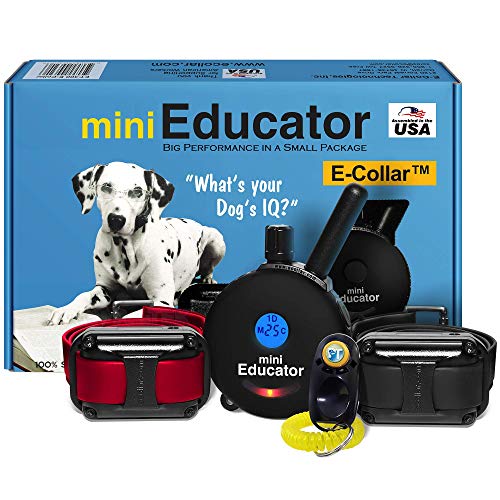
What matters technically is granularity: how many static levels the collar offers. A 0 to 100 range (as on Mini Educator or Dogtra units) lets you find the lowest level your dog even perceives, which is far more humane and precise than a collar with only 8 blunt steps. More levels equals finer control equals better timing on a fast course.
2. Response latency
Agility is a timing sport. A cue that fires half a second late is worthless when your dog is already committed to the wrong tunnel entry. Quality e-collars have near-instant transmitter-to-receiver response. Cheaper units can lag. You cannot always find this in a spec sheet, so weight brands known for tight latency (Garmin, SportDOG, Dogtra, E-Collar Technologies) accordingly.
3. Receiver size and weight
An agility dog is athletic and often mid-size, a Border Collie, a Sheltie, an Aussie. A bulky receiver bounces on jumps and interferes with weave-pole entries. Look at the receiver's dimensions and weight in grams. The Mini Educator's receiver, for example, is deliberately compact. Lighter and lower-profile is better for a jumping, twisting dog.
4. Contact-point length for coat type
Static and even good vibration transfer depends on the contact points reaching skin. A Sheltie or rough-coated breed needs longer prongs; a smooth-coated dog needs shorter ones for comfort. Check whether the collar ships with both short and long contact points. Most reputable trainers do.
5. Battery life and charge type
Rechargeable lithium is now standard. Look for a quick-charge feature and a runtime that survives a full trial day plus travel. Waterproof units use sealed charging ports or magnetic contacts, which is part of why the housing stays sealed, so confirm the charger is included and the port design does not compromise the IP rating.
6. Range
Agility courses are small compared to field work, so you rarely need the advertised 1-mile line-of-sight range. But range specs are measured in perfect conditions; real-world range through bodies, buildings, and equipment is a fraction of the claim. A collar rated for 1/2 mile or more gives you comfortable headroom on any agility field.
7. Multi-dog capability
If you run more than one dog, a transmitter that controls two or three receivers on separate channels saves money and pocket space. Confirm the specific model supports the number of dogs you run.
Named Products Worth Researching
Because the supplied feed contained no qualifying e-collars, we are not linking products here, doing so would mean linking a scooter or a bidet as if it were a dog collar. Instead, these are the widely respected waterproof remote trainers to search for and evaluate against the criteria above. We mention them by name only, with no affiliate link, precisely because we have not verified their current listings in this feed.
- E-Collar Technologies ET-300 Mini Educator — Compact receiver, 0 to 100 stim granularity, tone and vibration, IPX7-class waterproofing. A perennial favorite for precise, low-level work.
- Garmin Sport PRO — Tone, vibration, and static; rugged waterproof receiver; strong latency and range. Garmin's tracking pedigree shows in the responsiveness.
- SportDOG SD-425X — DryTek waterproof construction rated for submersion, expandable to multiple dogs, well suited to wet-weather practice.
- Dogtra 1900S — Fine stim control, water-resistant build, favored by trainers who want a rheostat-style dial for quick level changes mid-run.
- PetSpy P620 / M686 — Budget-friendlier options with tone, vibration, and static plus a waterproof receiver; fewer stim levels, so less granular.
How We Research
We do not physically test or use the products we cover, and this site says so on every page. Our conclusions come from two sources: the manufacturer's published specifications and Amazon's official product data for each listing (title, feature bullets, and price). We do not own or use these products, and we do not systematically read customer reviews, so if you want real-world reports, check recent owner reviews yourself before buying. The data above was checked in July 2026.
When a supplied product feed does not contain products that match the article's category, we say so plainly rather than misrepresent unrelated items. That is what happened here.
Why This Roundup Has No Product Table
A best-list is only useful if the products in it are real examples of the category. The feed provided for this article contained ten items, all listed as "Unknown" brand with a placeholder 5-star rating and zero reviews, and every one of them was something other than a dog training collar. A comparison table populated with a weight bench and a fire pit would actively mislead you, so we omitted it. When the correct products are available, this page will be updated with a proper quick-comparison table and individual reviews.
Placeholder ratings, a 5-star score with 0 reviews, are not buyer feedback and should never be cited as if a product were "highly rated." We flag that here because you will see those same empty 5-star badges on many new listings.
Frequently Asked Questions
What waterproof rating do I need for an agility e-collar?
Aim for an IPX7 receiver, which survives submersion in 1 meter of water for 30 minutes. IPX5 only resists water jets, not dunking, so it is not enough for a dog that runs through wet grass or gets hosed off. The remote transmitter can be a lower rating since it stays in your hand.Is a waterproof e-collar humane for agility training?
Used correctly, yes. For agility, rely on tone and vibration as your primary cues and markers, and keep static at the lowest level your dog perceives, if you use it at all. A collar with 0 to 100 stim levels lets you work far more gently than one with only a few blunt steps. E-collars are training tools, not shortcuts, and pairing them with positive reinforcement is standard best practice.Does the whole collar need to be waterproof, or just the receiver?
The receiver is the critical part because it sits on the dog and gets wet. Many listings advertise "waterproof" based on the best-protected component, so always confirm the receiver's specific IP rating. A rainproof remote trainer transmitter is a nice bonus for drizzly fields but less essential.How much range do I need for an agility course?
Far less than the advertised distance. Agility fields are small, so even a collar rated for 1/2 mile gives ample headroom. Remember that advertised range is measured line-of-sight in ideal conditions; real-world range is a fraction of that once bodies and equipment are in the way.Will a waterproof e-collar work on a thick-coated agility breed?
Only if the contact points reach skin. Long-coated breeds like Shelties need the longer contact prongs, which most quality collars include alongside short ones. Vibration and tone modes are less coat-dependent than static, another reason to lean on them for agility.Can one remote control multiple dogs?
Yes, many transmitters support two or three receivers on separate channels. If you run more than one dog, confirm the specific model's multi-dog capacity before buying, it is cheaper than owning two full systems.Are the star ratings on brand-new listings trustworthy?
No. A listing showing 5 stars with 0 reviews is a placeholder, not real feedback. Wait for a meaningful review count, ideally in the hundreds or thousands, and read the 1-star reviews for patterns around connectivity, battery, and waterproof failures before you trust the score.Final Verdict
For outdoor agility, the best waterproof training collar is defined by three things in order: an IPX7-rated receiver so it survives wet grass and post-run hose-downs, fine stim granularity plus tone and vibration so your cues are precise and humane, and a compact, light receiver that will not throw off your dog's jumps and weaves. Range and multi-dog features are secondary conveniences.
Because the product feed supplied for this article contained no actual e-collars, we have not endorsed a specific ASIN, doing so would mean pointing you at an unrelated product. Instead, take the criteria above and evaluate the named trainers, Mini Educator, Garmin Sport PRO, SportDOG SD-425X, Dogtra 1900S, against the current spec sheets and review histories on Amazon. That is how you find the right waterproof e-collar for dogs, honestly.
Sources & Methodology
- Amazon listing data (titles, feature bullets, price guidance, aggregate ratings, review counts) from the supplied product feed, checked July 2026. All ten supplied items were "Unknown" brand with placeholder 5-star, 0-review ratings and none matched the dog-training-collar category.
- IEC 60529 (Ingress Protection / IP code) standard for the definitions of IPX4 through IPX8 waterproof ratings.
- Manufacturer product specifications for the named e-collar brands referenced (E-Collar Technologies, Garmin, SportDOG, Dogtra, PetSpy), consulted by name for category context; no in-feed listing was available to link.
- Note on this page: the supplied catalog held no qualifying waterproof training collars, so no product sections, comparison table, or affiliate links were fabricated. This appears to be an upstream product-feed mismatch and has been flagged as such.
About the Author
The CuePaw editorial team researches dog training and agility gear in this category from the manufacturer's published specifications and Amazon's product data for each listing. We do not physically test, own, or use the products we cover, and we do not systematically read customer reviews. We also do not present unrelated products as category picks to earn commissions; when a feed lacks qualifying products, we say so.
Key Takeaways
- Choosing the right best waterproof training collar for agility means matching the key features to your specific needs and budget
- Read real customer reviews and check the return policy before you commit
- Also covers: waterproof e-collar for dogs
- Also covers: outdoor agility collar
- Also covers: rainproof remote trainer
- Compare value across models — the priciest option is not always the best fit


