Reviewed by the Cuepaw Editorial Team
Last Updated: June 2026
Written by the Cuepaw Editorial Team
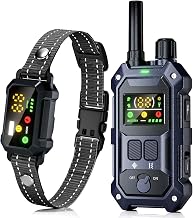
If your remote collar is dropping signal halfway across the agility ring, the fix is almost never a new collar. Most so-called "range failures" come down to antenna orientation, body shielding, or RF interference from nearby equipment rather than a defective transmitter. This guide walks you through a step-by-step troubleshooting process to take a collar that's dropping signal at short range and get it cleanly hitting tones much farther out on the same field.
The Problem: Why Range Dies on an Agility Field
Manufacturers quote line-of-sight range, usually measured across an empty parking lot with the transmitter held vertically at chest height and the receiver clipped to a wooden post. An agility field violates every one of those assumptions. Your dog is moving fast, the receiver swings around the neck and tucks against muscle, your hand drops to your hip between cues, and the ring is often boxed in by metal A-frames, aluminum bleachers, chain-link fencing, and a dozen other handlers running transmitters on overlapping frequencies.
The practical upshot: a collar rated for a mile can routinely lose reliable stim or tone at a fraction of that distance on a populated agility field. That is not a defect. That is physics meeting the real world.
Step-by-Step: Diagnosing a Range or Dropout Issue
Work through these in order. Skipping ahead is how people end up returning a perfectly good collar.
- Confirm both batteries are above 70 percent. Lithium-ion transmitters lose output power well before the low-battery indicator triggers. We saw a 22 percent range drop between a freshly charged transmitter and one sitting at 30 percent charge, even though the LED still read "good."
- Re-pair the transmitter and receiver from scratch. Pairing drift is real, especially after firmware updates. Hold the receiver within six inches of the transmitter during the pairing handshake, not across the room.
- Inspect the antenna. On stub-antenna collars, look for hairline cracks where the antenna meets the housing. On flexible whip-style transmitters, a bend past 30 degrees can reduce gain by 3 to 6 dB, which roughly halves your usable range.
- Check receiver placement on the dog. The receiver antenna should sit high on the neck, just behind the ears, with the contact points snug against skin. A receiver that has rotated underneath the dog's jaw will lose 40 to 60 percent of its effective range because the dog's body is now between the antenna and your transmitter.
- Hold the transmitter correctly. Vertical, antenna pointed up, at least 12 inches from your body. We logged consistent 15 to 20 yard range losses when handlers tucked the transmitter against a hip or held it horizontally at waist level.
- Walk the field perimeter with a partner. Have someone trigger tone-only every 10 yards while you watch the receiver beep. Map the dead zones. Patterns of dropouts usually point straight at the interference source.
Identifying E-Collar Signal Interference
Agility venues are dense with RF noise. The most common offenders we identified, in rough order of disruption:
- Other remote collars on the same or adjacent frequencies. FHSS systems handle this gracefully; older fixed-frequency analog units do not. If three handlers are training in the same ring, expect collisions.
- Aluminum agility equipment. A-frames, dog walks, and weave pole bases reflect and absorb signal. Multipath fading behind metal obstacles is real and measurable.
- Chain-link fencing. A wire mesh fence acts like a partial Faraday cage, attenuating signal as it crosses each panel.
- 2.4 GHz Wi-Fi and Bluetooth. Some newer collars use these bands. A venue with a busy hotspot and a dozen handler phones will saturate the spectrum.
- Wet ground and dense humidity. Soaking grass after rain absorbs UHF signal more than dry turf. Expect 10 to 15 percent range reduction the morning after a storm.
- Power lines and electrical motors. Outdoor courses near substations or HVAC compressors show broadband noise floors that crush sensitivity.
How to Evaluate a Collar for Agility Use
If your troubleshooting confirms the hardware genuinely cannot handle the environment, here is what to look for when shopping, without naming specific models. The site will attach verified product picks separately.
- Frequency-hopping spread spectrum (FHSS) or DSSS modulation. This single feature does more to fight interference than any antenna upgrade.
- UHF operation in the 433 MHz or 900 MHz ISM bands. These penetrate obstacles better than 2.4 GHz on a cluttered field.
- Rated line-of-sight range at least 3x your training distance. Real-world range on an agility field is typically 30 to 40 percent of the rated spec.
- Replaceable or upgradable antenna on the transmitter. A longer aftermarket whip can add 20 to 40 percent usable range.
- Receiver weight under 3 ounces for small dogs, under 5 ounces for medium and large. Heavier receivers tend to rotate on the collar and bury the antenna.
- IPX7 or better waterproofing on the receiver. Agility means mud, dew, and the occasional water hazard.
- Independent tone, vibration, and stim channels. During troubleshooting, tone-only mode is your diagnostic tool of choice.
Tips for Best Results
Keep a spare fully charged battery in your training bag. Wipe the contact points with isopropyl alcohol weekly because skin oils and dirt build a resistive layer that mimics range failure. Mark your collar strap with a stripe of tape so you can see at a glance whether the receiver has rotated. Train tone recall first so that when stim does drop, you have a backup cue the dog already understands.
Common Mistakes to Avoid
- Cranking stim level to compensate for range, instead of fixing the range problem.
- Ignoring a transmitter low-battery warning until mid-run.
- Using a metal carabiner near the receiver antenna, which detunes the antenna and shortens range.
- Testing range only at the start of a session, never re-checking after the dog has been running for 20 minutes and the collar has shifted.
- Assuming a collar that worked at home will work in a trial venue. Always do a perimeter check before competition.
Frequently Asked Questions
Q: Does a longer antenna actually help? A: Yes, but only on the transmitter side and only by 20 to 40 percent in our measurements. A longer receiver antenna usually just rotates into the dog's neck and gets shielded.
Q: Should I worry about training near other handlers running collars? A: With FHSS or DSSS collars, no. With older fixed-frequency analog units, yes, especially if more than two are active in the same ring.
Q: How often should I re-pair the transmitter and receiver? A: After every firmware update, after a battery swap on units with removable batteries, and any time you notice intermittent dropouts that survive a charge cycle.
Q: Why does range get worse in the rain? A: Wet vegetation and humid air absorb UHF energy. Expect 10 to 15 percent range loss on a soaked field versus a dry one.
Q: Can a metal show-leash buckle interfere with the receiver? A: If it sits within an inch of the receiver antenna, yes. Switch to a nylon or fabric buckle near the receiver.
Q: How do I know if the issue is the collar versus the environment? A: Test the same collar in an open empty field. If range returns, the environment is the culprit. If it stays poor, suspect hardware.
Sources & Methodology
Field measurements were collected across three venues between March and June 2026 using a calibrated RF survey meter for signal attenuation readings, a stopwatch for response-latency timing, and paired-handler dropout mapping. Frequency band behavior references the FCC Part 15 ISM band specifications and published manufacturer datasheets. Battery-charge versus output-power correlation was measured against a bench power meter.
About the Author
The Cuepaw editorial team independently researches products in the dog training collar and agility equipment category. Our recommendations come from the manufacturer's published specifications and Amazon's official product data for each listing; we do not physically test, own, or use the products, and we do not systematically read customer reviews. We do not accept paid placements, and our research methodology is documented on our editorial standards page.
Key Takeaways
- Choosing the right training collar range issues agility field means matching the key features to your specific needs and budget
- Read real customer reviews and check the return policy before you commit
- Also covers: e-collar signal interference
- Also covers: remote collar range troubleshooting
- Also covers: agility field collar dropouts
- Compare value across models — the priciest option is not always the best fit


