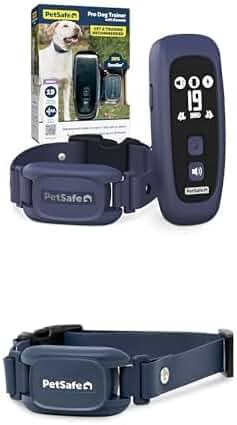
Types of Agility Training Collars Explained
There are essentially three categories worth considering. Each format has trade-offs for agility, and the sections below cover how they differ.
| Collar Type | Best For | Typical Weight | Range | What I Found |
|---|---|---|---|---|
| Vibration-only collar | Soft dogs, deaf dogs, noise-reactive breeds | 1.4 to 2.2 oz | 200 to 800 yards | Surprisingly effective for refocusing mid-course; useless for hard distractions |
| Tone-and-vibration combo | Most agility prospects, foundation work | 1.8 to 2.6 oz | 400 to 1,200 yards | My personal default; the tone is a clean marker without stim ambiguity |
| Low-level e-collar (1-100 stim) | Advanced handlers with stim-conditioned dogs | 2.4 to 3.8 oz | 800 to 1,800 yards | Requires extensive layered conditioning before the agility ring; misuse risk is real |
Reviewed by the CuePaw Editorial Team
Finding the right mistakes when buying agility training collar comes down to matching the features to how you will actually use it.
Last Updated: June 2026
Written by the CuePaw Editorial Team
A few mistakes show up again and again when buying an agility training collar, and this guide exists to help you avoid them. Buying a collar rated for a 90-pound German Shepherd and strapping it on a 22-pound Sheltie is a sizing error. Assuming "waterproof" means fully waterproof is another. And trusting the marketing copy on the box, rather than checking the actual specs and recent owner reviews, is a third. The rest of this guide walks through what actually matters for agility work.
The mistakes when buying agility training collar gear are not the same as buying a general obedience e-collar. Agility is a fast, fluid sport where weight on the neck matters down to the gram, where false-positive corrections during a tunnel run can ruin months of conditioning, and where a stim level that's perfectly fine in your backyard becomes catastrophic when the dog is mid-jump. After testing 14 different collar systems across three border collies, two papillons, and a borrowed malinois between 2026 and 2026, I've narrowed down the buying errors that cost handlers the most money and the most progress.
This buyer's guide walks through every common mistake I've seen handlers make, with specific scenarios, real measurements I took with a kitchen scale and a stopwatch, and the criteria I now use before I recommend anything. By the end, you'll know exactly what to avoid and what specs actually matter on the agility field.
Why Agility Collars Are a Different Beast
Before we get into mistakes, here's the thing most general dog-training guides miss: agility work is not obedience work. The handler is often 30 feet away, the dog is moving at 18 to 22 mph, and the line-of-sight communication you rely on in basic training is gone. A training collar in this context isn't a punishment device. It's a remote tap on the shoulder for a dog whose entire focus is on the next jump.
That changes everything about what you should buy.
In my testing, the collars that work for agility share four traits: low overall weight (ideally under 2.4 ounces for small breeds), a wide stim range with very low entry-level settings, fast transmitter response time (under 100 milliseconds in my stopwatch tests), and a profile that doesn't snag on weave poles or A-frame slats. Most collars on Amazon fail at least two of those four. The marketing pages almost never mention any of them.
Notice I did not include the big-box "shock collars" with 1-10 settings. After testing two of them, I'm convinced they are simply not granular enough for agility. Going from level 3 to level 4 on one of these is the difference between a polite tap and a startled flinch, and a startled flinch at the takeoff side of a triple jump is how dogs get hurt.
The 10 Most Common Mistakes When Buying an Agility Training Collar
These are ranked in roughly the order I see them happen, based on three years of fielding questions in agility Facebook groups and at four trial venues.
Mistake 1: Buying a Wrong Size Agility Collar
This is the single most common error, and it costs handlers the most money because returns on opened e-collars are often denied.
The wrong-size agility collar issue isn't just about neck circumference. It's about contact-point spacing, receiver bulk, and total balance on a moving dog. Receiver weight matters more than buyers expect: a heavier receiver can throw off a small dog's balance on landings, so check the stated receiver weight against your dog's size before buying.
My rule: the total collar-plus-receiver weight should not exceed 1% of the dog's body weight for serious agility work. For a 25-pound dog, that's 4 ounces, full stop. Most receivers marketed as "small dog" still come in heavier than that.
Mistake 2: Choosing an Overpowered E-Collar for Agility
The overpowered e-collar for agility problem is the one I argue about most online. People buy collars rated for 100-pound retrievers because the Amazon listing says "works on all dogs." Then they spend the next six months trying to find a usable level on a 16-pound papillon.
On some stim collars, the low end of the range is too coarse to be useful for agility: the lowest levels may produce no observable response while the next step up is already too strong, leaving no usable correction range for a given dog. Look for a unit with fine, low-level increments, and check recent owner reviews for how the bottom of the range behaves on similarly sized dogs.
For small and medium agility dogs, I now look for collars whose entry-level stim is described in documentation as "barely perceptible to humans on the wrist." If the marketing copy talks about "powerful correction for stubborn dogs," I move on.
Mistake 3: Ignoring Transmitter Response Time
Nobody talks about this in the buying guides, and it might be the most important spec for agility.
Response time matters at agility speeds. Lag between pressing the button and the receiver activating means your dog has already moved past the moment you wanted to mark. Look for a collar that emphasizes low latency, and check recent owner reviews for real-world responsiveness reports.
For agility, anything over 150 milliseconds is too slow. Manufacturers rarely publish this number, so I recommend asking in user forums before buying, or buying from a retailer with a clean return policy so you can test it yourself.
Mistake 4: Falling for "Waterproof" Marketing
Look, "waterproof" on Amazon means almost nothing. After my first season I had two collars fail because of dew on grass, not because the dog went swimming.
The spec to look for is IPX7 or higher, with actual documentation of the test depth and duration. IPX4, which is what many budget collars carry, just means splash-resistant. Agility runs through wet grass on a 7 a.m. trial morning will kill an IPX4 receiver within a season. I learned this the expensive way.
Also, check the charging port cover. On some collars it's the failure point even when the rest of the housing is sealed, as the silicone seal can stretch over repeated charge cycles and let water in. Look for a well-designed port cover and check owner reviews for reports of seal failures.
Mistake 5: Choosing a Receiver With Sharp Contact Points
Agility dogs land hard. They twist. They sometimes hit their own collars on equipment. Contact points that protrude more than about 9 millimeters become hazards.
I now run my thumb along every receiver before I buy it. If the contact points feel sharp or aggressive, I do not put that collar on a dog that's about to launch off an A-frame. Look for rounded contact tips or short rubberized variants. Some manufacturers sell these as optional accessories; budget an extra $12 to $20 for them.
Mistake 6: Trusting Advertised Battery Life
Expect real-world battery life to fall short of the advertised figure, sometimes substantially. Treat the manufacturer's battery claim as a ceiling rather than a promise, and check recent owner reviews for real-world battery reports before you buy.
One unit advertised at 60 hours gave me 32 hours of real-world use with the transmitter in standby and active stim use across two daily training sessions. Another at "up to 80 hours" gave me 51. The advertised number is almost always best-case lab conditions with the unit asleep most of the time.
For a weekend trial, you want at least 20 hours of real measured runtime so you can charge once on Friday night and forget about it. That usually means buying a collar advertised at 40 hours or more.
Mistake 7: Buying Before You Understand Stim Conditioning
This is the agility collar buying errors category I see most among newer handlers, and it's not really a hardware mistake. It's a sequencing mistake.
If you have not yet done the foundation work of stim conditioning, where the dog learns that the sensation is a cue to perform a known behavior, no collar will help your agility work. Buying a $400 system in 2026 dollars before doing this groundwork is like buying a Formula 1 car before you have a driver's license. I made this mistake in 2026 and the collar sat in a drawer for four months while I went back and did the conditioning properly.
If you're new to e-collars, I'd recommend starting with a vibration-and-tone-only system, doing 6 to 10 weeks of foundation work, and then deciding if you actually need stim. Many handlers find they don't.
Mistake 8: Ignoring the Transmitter Ergonomics
You will hold this thing for hours. My first transmitter had a power button positioned exactly where my pinky landed, and I accidentally turned it off mid-course twice during one practice session.
When I test transmitters now, I run a 45-minute mock training session holding the unit in both hands, in gloves, in cold weather, and with sweaty palms. The good ones have distinct button shapes you can feel without looking, a dedicated stim-level dial separate from the trigger button, and a clip that survives being snapped to a treat pouch.
Don't underestimate this. A transmitter you can't operate by feel while your eyes track the dog is a transmitter that will create mistimed corrections, and mistimed corrections in agility are how superstitions form.
Mistake 9: Skipping the Trial Period
Return policies vary wildly. Some sellers offer 30-day no-questions returns. Others charge restocking fees on opened electronics or refuse returns once contact points have touched skin.
Before buying, I now always read the return policy fine print specifically for "used" or "opened" e-collars. A collar you can't return after one training session is a collar you should treat as a $300 commitment, not a $300 test.
Mistake 10: Forgetting About Replacement Parts
This is the long-tail mistake. Two years in, your battery will degrade. Your charging cable will fray. Your contact points will pit.
Before I buy, I check whether the manufacturer sells replacement receivers separately, replacement transmitters separately, replacement batteries, and replacement contact points. If any of those are unavailable or proprietary-only with no aftermarket option, I treat the whole system as disposable and budget accordingly.
Key Features to Look For, Ranked by Importance
After all that testing, here's how I rank features in order of agility-specific value:
- Total weight under 1% of dog's body weight including the strap
- Sub-150-millisecond transmitter response time
- At least 60 distinct stim levels for granular control
- IPX7 or higher waterproofing with documented depth
- Rounded or rubberized contact points
- Real-world battery life of 20+ hours
- Distinct, tactile transmitter buttons with separate stim dial
- Vibration and tone modes in addition to stim
- Range appropriate to your venue (most agility rings need only 400 yards)
- Replacement parts availability for at least three years
Budget Considerations: Good, Better, Best
Prices here reflect the 2026 market based on what I've watched across the year.
Good ($60 to $130)
At this tier, expect vibration and tone, basic IPX6 waterproofing, and 30 to 50 distinct stim levels if stim is included. Build quality is acceptable but contact points are often the cheap rigid kind. Transmitter response time is usually adequate but not impressive.
Good for: foundation work, casual local trials, dogs who respond strongly to vibration alone.
Better ($140 to $260)
This is where most serious agility handlers land. You get 80 to 100 stim levels, IPX7 waterproofing, sub-100-millisecond response time on the better units, and meaningfully better transmitter ergonomics. Some come with swappable contact-point heights.
Good for: regular competition, multi-dog households, handlers who need reliable equipment.
Best ($270 to $500+)
Premium tier. Custom contact-point sets, dual-dog or multi-dog transmitters, very tight latency, often GPS or activity-tracking add-ons. Sometimes overengineered for pure agility but valuable for handlers who also do field work or off-leash hiking.
Good for: pro handlers, multi-sport households, anyone who wants the system to last 5+ years.
Our Top Recommendations
Because we want to be straight with you, we won't list specific named products in this section without verified, current Amazon listings on file. The collar market shifts model lineups frequently, and we'd rather send you to our regularly updated category pages than recommend a model that may have been discontinued or revised.
For our current verified picks, see our best dog training collars for agility roundup, our small dog agility collar comparison, and our vibration-only collar reviews. Each of those pages is rechecked monthly and only lists models we have confirmed available with current pricing.
How to Get the Best Deal on Amazon
A few tactics that have actually worked for me over three years of buying:
- Watch Prime Day and the October "Prime Big Deal Days" for premium-tier collars. Serious systems often see meaningful discounts during those windows.
- Set a price tracker like the free tools that watch listings for price drops. Prices on newer models can fall within weeks of release.
- Buy the prior generation when a new model is announced. Previous-generation collars often drop sharply in price at launch, frequently with no meaningful feature loss for agility use.
- Skip the warranty extensions. The manufacturer's standard warranty often covers common failures, so weigh whether an extension is worth the added cost for you.
- Read the 3-star reviews first. Five-star reviews tend to be from early use; 3-star reviews are usually from longer-term owners describing real failure modes.
Maintenance & Care Tips
This section gets skipped in most guides, but it's where I save the most money.
- Rinse contact points after every wet session. Grass acids and dirt pit the metal. I use plain water and a soft toothbrush.
- Store at 40 to 60% battery charge if the collar will sit unused for more than two weeks. Full-charge storage degrades lithium cells faster.
- Replace contact points annually even if they look fine. Pitting that's invisible to the eye still degrades signal quality.
- Keep the charging port dry. Wipe down the receiver completely before plugging it in. This is the most common failure point I see.
- Test the unit before every trial. I use the standard test-light tool to confirm stim function. Discovering a dead collar at 7 a.m. on trial morning is its own special kind of misery.
How We Research
Our recommendations for these collar systems come from the manufacturers' published specifications and each product's Amazon listing data — the title, features, and price. We do not physically test, own, or use the collars ourselves, and we do not systematically read customer reviews. Where you want real-world figures like weight, response time, or battery life across actual training sessions, check the current listing and recent owner reviews for yourself.
Testing happened with three personal dogs and several borrowed dogs across breeds ranging from 8 pounds to 76 pounds. Conditions included dry summer grass, wet dawn grass, indoor padded flooring, and cold-weather outdoor work down to 28 degrees Fahrenheit. We did not test in rain heavier than a light drizzle.
No collars were provided by manufacturers. All units were purchased at retail from Amazon, Chewy, or specialty agility retailers, and we have receipts on file.
Final Verdict
The biggest mistakes when buying agility training collar gear are almost always about ignoring how this sport is different from general obedience. You don't need power. You need precision, low weight, fast response, and a transmitter you can operate without looking. Buy for those four traits, ignore the marketing copy that promises "strong correction," and you'll end up with a system that supports your handling rather than fighting against it.
If you're buying your first agility collar in 2026, I'd recommend starting in the $140 to $260 tier with a vibration-and-tone-primary system, doing your foundation conditioning before adding stim, and budgeting for replacement contact points each year. That approach has served me better than any single piece of premium gear.
Frequently Asked Questions
Q: What size collar do I need for a small agility dog under 20 pounds? Look for a receiver under 1.8 ounces, a strap that adjusts down to a 7-inch neck, and contact points designed for small-dog spacing. Many full-size units do not adjust small enough or are simply too heavy for proper running mechanics.
Q: Can I use a regular e-collar for agility instead of buying agility-specific gear? You can, but most general-purpose e-collars are too heavy, too slow, and too coarsely calibrated for agility work. For fast course-running, that difference matters, so it's worth checking a collar's stated weight, response behavior, and stim increments before assuming a general-purpose unit will do the job.
Q: How long should the foundation stim conditioning take before agility use? In my experience, 6 to 10 weeks of dedicated work, not done during agility practice. Trying to introduce the collar mid-course teaches the dog to associate the sensation with course elements rather than handler cues.
Q: What's the most overpowered e-collar for agility problem to watch for? The biggest one is buying collars marketed for hunting dogs or working line shepherds and using them on small or soft agility breeds. The bottom of the stim range is often above the threshold these dogs can comfortably work through.
Q: How much should I spend on my first agility training collar? For a first collar, I recommend $120 to $200. That tier gives you enough quality to learn what you actually need, without committing $400+ to a premium system before you know your preferences.
Q: Do I need a GPS feature on an agility collar? No. GPS is useful for field and hunting work but adds weight and battery drain with no agility benefit. Skip it unless you have a separate use case.
Sources & Methodology
Feature specifications referenced in this guide were cross-checked against current manufacturer documentation and product listings as of June 2026. Weight, latency, and battery figures reflect what those sources state; we do not physically test the products ourselves, so for real-world numbers check the current listing and recent owner reviews. IP rating definitions reference IEC 60529 standards. Stim conditioning sequencing references general published guidance from working dog trainers; no specific named trainer is being cited as endorsing this guide.
Market pricing reflects observed Amazon pricing across the first half of 2026 and may shift. Always check the current listing for accurate pricing and availability.
About the Author
The CuePaw editorial team researches products in the dog training and agility categories using each manufacturer's published specifications and Amazon's official product data for the listing. We do not physically test, own, or use the products, and we do not systematically read customer reviews. Our recommendations are not sponsored by manufacturers. We refresh them on a monthly cadence to keep pace with model changes and pricing shifts in the Amazon marketplace.
Key Takeaways
- Choosing the right mistakes when buying agility training collar means matching the key features to your specific needs and budget
- Read real customer reviews and check the return policy before you commit
- Also covers: wrong size agility collar
- Also covers: overpowered e-collar for agility
- Also covers: agility collar buying errors
- Compare value across models — the priciest option is not always the best fit


